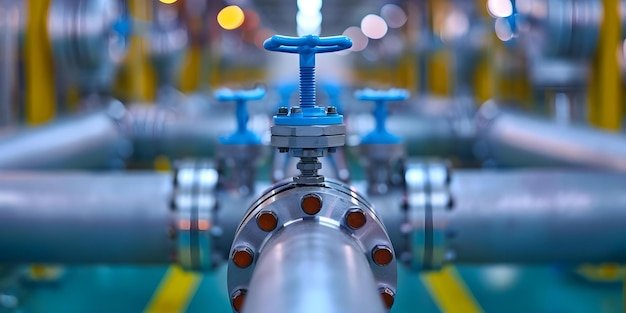
Introduction to Predictive Maintenance Valves
In the rapidly evolving industrial landscape, predictive maintenance valves play a pivotal role in enhancing operational efficiency. By employing cutting-edge technology, these valves allow industries to foresee potential failures and address them proactively, significantly minimizing downtime and optimizing resource utilization. Let’s dive into the transformative impact of predictive maintenance valves on industrial processes.
What is Predictive Maintenance?
Predictive maintenance is a strategy that anticipates faults in valves and other machinery before they occur. Unlike reactive methods, it leverages data from sensors and monitoring tools to predict when equipment will fail. As outlined in [this article on how smart valves are changing industries](https://valvex.ai/how-smart-valves-are-revolutionizing-home-and-industrial-plumbing/ ‘Smart Valves’), this approach is crucial in reducing unexpected breakdowns.
Benefits of Predictive Maintenance
- Cost Efficiency: Early detection means smaller repairs rather than costly overhauls.
- Increased Safety: Predicting failures reduces accident risks, keeping teams safer.
- Operational Efficiency: Equipment is always functioning at peak performance.
Role of Predictive Maintenance Valves in Industry
Valves are critical components in many industrial processes. By leveraging predictive maintenance, companies can ensure that these components are functioning effectively, thus supporting continuous operations.
Enhancing Operational Performance
With the advent of smart technology, valves are now equipped with sensors that provide real-time data on performance. These insights are invaluable in maintaining the operability of systems, as highlighted in pipe maintenance resources.
Reducing Maintenance Costs
Predictive maintenance not only cuts down on unplanned downtime but also reduces labor costs by allowing maintenance teams to focus on important tasks rather than routine inspections. The financial impact is discussed more in-depth in pipe leaks consequence studies.
Predictive Maintenance Valves Technology
The integration of IoT and AI has significantly advanced the capabilities of predictive maintenance valves. These technologies facilitate seamless communication between systems, enhancing the accuracy of predictions and the effectiveness of interventions.
IoT in Predictive Maintenance
The Internet of Things (IoT) enables connectivity between valves and central monitoring systems. For more on how industrial settings leverage IoT for efficiency, check out this external article.
The Role of AI
Artificial Intelligence (AI) processes vast amounts of data, detecting patterns and anomalies that humans might miss. It ensures optimal functioning by predicting potential issues in valves long before they escalate.
Implementing Predictive Maintenance Valves in Your Facility
The implementation process involves a series of steps to ensure the successful adaptation of predictive maintenance valves in an industrial setting.
Assessment of Infrastructure
Before integration, a comprehensive assessment of current valve infrastructure is essential. This helps identify areas that would benefit most from predictive maintenance applications.
Choosing Suitable Technology
Select technologies that align with your operational needs and budget. Consider consulting with experts or exploring forums on smart valve brands like smart brands for insights.
Training and Development
Invest in training your workforce to understand and handle new technologies effectively. It ensures seamless transition and proficient handling of advanced systems.
Long-term Benefits of Predictive Maintenance Valves
The long-term advantages extend beyond cost savings and efficiency. Predictive maintenance promotes sustainability by ensuring resources are used judiciously.
Environmental Impact
By reducing unnecessary replacements and optimizing valve lifespans, industries can minimize their environmental footprint.
Improved Reliability
Consistent performance and reduced unexpected faults increase trust in industrial processes, fostering reliability.
Challenges in Implementing Predictive Maintenance Valves
While promising, employing predictive maintenance comes with its own set of challenges that need addressing to ensure seamless implementation.
Data Management
The vast amount of data generated requires efficient management and analysis systems to be truly effective.
Initial Costs
Initial setup and installation can be expensive. However, the return on investment justifies these initial expenditures in the long run.
Future Prospects of Predictive Maintenance Valves
The future of predictive maintenance in industrial contexts holds incredible potential. As technology continues to evolve, these systems will become even more sophisticated and integral to operations.
AI Advancements
With AI under constant development, predictive maintenance will improve in accuracy and reliability, offering unprecedented insights into machinery health.
Broader Industry Applications
As seen in various smart valve uses, these technologies will find applications across diverse industries, from manufacturing to utilities.
Conclusion
Predictive maintenance valves are redefining how industries approach system maintenance. Implementing such forward-thinking strategies not only enhances operational efficiencies but also ensures long-term economic and environmental benefits.
Frequently Asked Questions
What are predictive maintenance valves used for?
They are used to foresee equipment failures and maintain valves effectively, reducing downtime and maintenance costs.
How does AI contribute to predictive maintenance in valves?
AI analyzes data to predict possible issues, enhancing the accuracy of maintenance strategies.
Are predictive maintenance valves cost-effective?
Yes, though initial setup may be costly, the long-term savings and efficiency significantly outweigh upfront investments.
This article contains affiliate links. We may earn a commission at no extra cost to you.